Smoke gets detected before the flame.
Smoke and heat detectors, manual call points and a siren — the signal reaches the monitoring centre as a priority, not just the corridor.
When this makes sense
- The building is a hotel, school or public space where fire detection is a legal requirement.
- There are rooms without constant supervision — a storeroom, plant room, attic.
- An alarm or CCTV system is already in place, but there's no priority signal for fire.
- Staff need a manual call point somewhere visible, not just automatic detection.
When it doesn't
- The building already has a certified fire system that meets code — then we only check the link to the monitoring centre.
- The space is small, constantly supervised and outside the mandatory-detection category — a simple battery smoke detector may be enough.
- You're after fire suppression, not detection — that's a job for a specialised fire-protection contractor; we design detection and signalling.
How it works
- 01
Detection
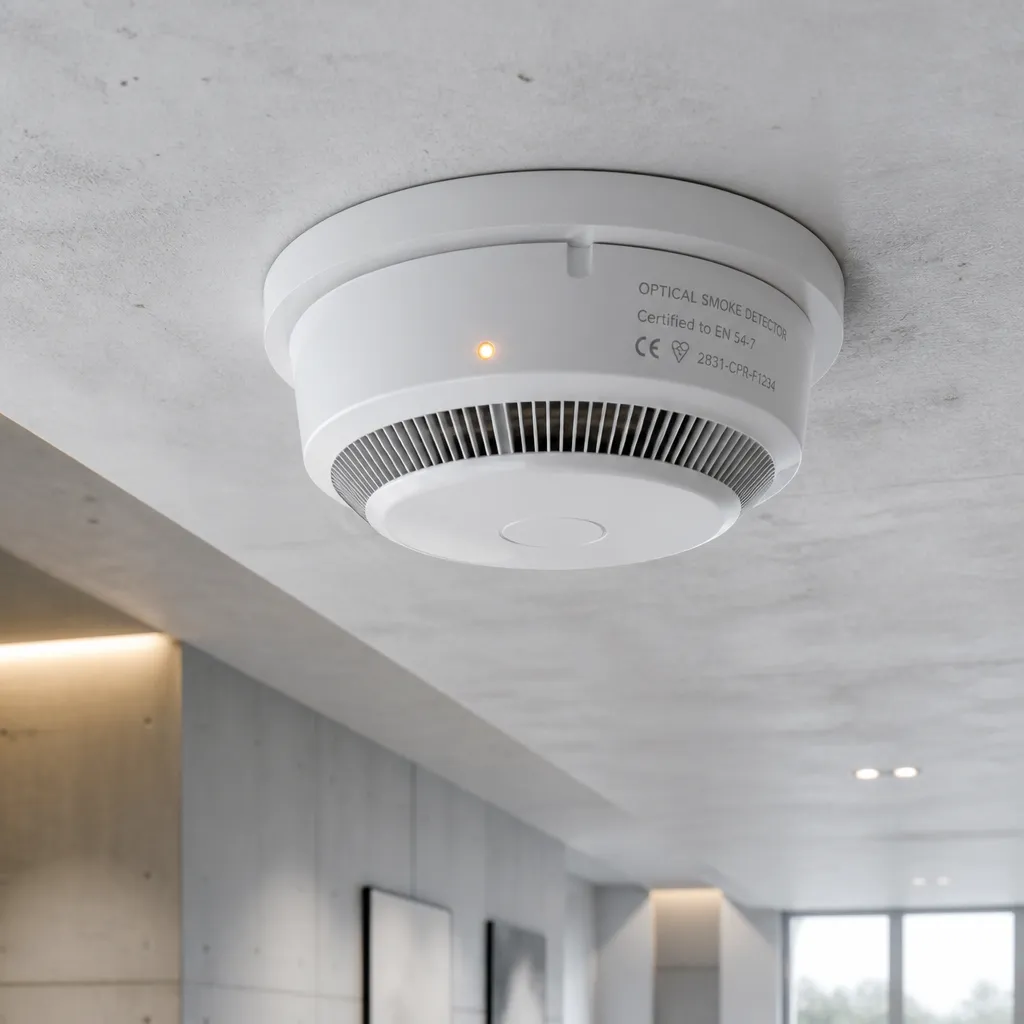
Smoke and heat detectors are placed room by room according to use: smoke where people spend time, heat in kitchens and plant rooms.
- 02
Manual call points
Mounted at exits and in corridors, so anyone can trigger the alarm even before a sensor reacts.
- 03
Siren and signalling
Audible and visual alerts warn people in the building while the panel logs which zone the event came from.
- 04
Priority signal to the centre
The event reaches our monitoring centre flagged as priority, ahead of every other signal in the system.
- 05
Fire protocol
The operator sees the zone immediately and follows the protocol agreed with you — calling the fire service, the responsible person, evacuation.
What's in the system
- Smoke detectorsoptical, per room
- Heat detectorskitchens, plant rooms
- Manual call pointsexits, corridors
- Sirens and visual signallingindoor and outdoor
- Fire paneladdressable or conventional zones
- Link to the monitoring centrepriority signal
Technical parameters
- Zone type
- addressable / conventional
- Power
- 220 V + battery backup
- Signal to the centre
- priority, IP + mobile backup
- Siren
- audible and visual, indoor and outdoor
- Standard
- matched to the building's regulatory category
- Monitoring
- 24/7 with priority signal
Example — 40-room hotel
- Smoke detectors
- 48 (rooms + corridors)
- Heat detectors
- 6 (kitchen, laundry, boiler room)
- Manual call points
- 8 (exits, stairwells)
- Monitoring
- 24/7, priority signal
Illustrative example, not an offer. The final project follows a site visit.
Questions
Can fire detection go to the same monitoring centre as the alarm?
Yes, and it's treated as a priority signal: the operator sees the zone immediately and follows the fire protocol agreed with you.
Does a fire system put the fire out?
No, the system detects and signals. Suppression is a job for specialised fire-fighting equipment and contractors; we design and install detection.
Is fire detection mandatory for my building?
It's mandatory in hotels, schools and public buildings under current regulations. For other uses we check together based on building type and size.
What happens if smoke is detected outside working hours?
The signal reaches the monitoring centre as priority, the operator checks the zone and follows the agreed protocol — calling the fire service or the responsible person.
Site visit and assessment are free of charge.
Site visit and assessment are free of charge · Mon–Fri 08:00–16:00