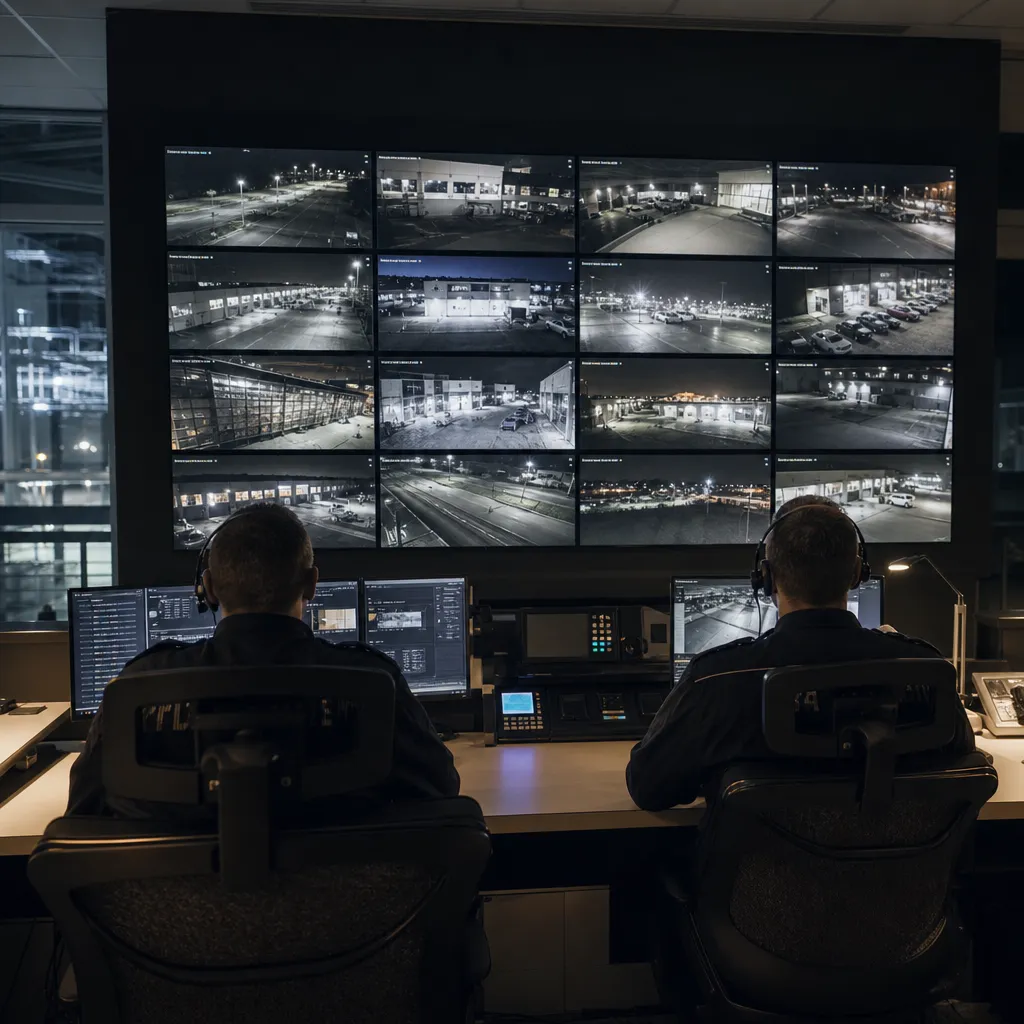
The operator looks at the picture before making the call.
Detection is the easy part. The value is in verification: a person who sees whether it's a burglar, a cat or a curtain in a draught — and only then acts on your protocol.
What happens when an alarm triggers
- 01
Detection
A sensor, IR barrier or camera analytics registers the event and sends it to the centre — over IP, with mobile network as backup.
- 02
Verification on camera
The operator opens the camera covering that zone and sees what actually happened before waking anyone.
- 03
Your call list
We call in the order you set: the responsible person, a second contact, then emergency services or police.
- 04
Report
Every event is logged with time, zone, operator and outcome. Footage is kept and handed over on request.
Response times and the intervention protocol are set by the monitoring contract.
What we watch
- Video surveillance, live and on event24/7
- Burglar alarm and perimeter24/7
- Fire and smoke detectionPriority
- Panic button, staff and tillsPriority
- Technical faults: power, link, diskAutomatic
- Vehicles and GPS fleetOn request
What you get
- Coverage
- 24 h / 365 days
- Link
- IP + mobile backup
- Verification
- operator, on camera
- Your app
- live view + archive
- Monthly report
- events + faults
- Data
- ISO 27001
Already have cameras and an alarm? In most cases the existing system can connect to the centre without replacing equipment.
Who's in the centre
People who've done this before.
Our monitoring centre is staffed by former police officers and IT specialists. One group knows what a break-in looks like; the other keeps the link, recorders and archive alive.
Your system already sees. Let someone watch it too.
We review the existing installation, then propose connecting it without replacing equipment.